By Giannis Aggelakis
Greek photographer Pavlos Kozalidis is one of the most unique, quiet, prolific, and influential figures in the field of classical, humanistic photography worldwide. He speaks to us from Lebanon, where he is currently cut off.
The history of modern documentary photography and street photography is rife with creators seeking rapid recognition through immediate digital consumption and integration into global commercial image distribution networks. However, on the periphery of this frenetic production, one finds artists who approach the medium not as a profession or a vehicle for promotion, but as a deep, existential search and a rigorous, almost ascetic, way of life. Greek photographer Pavlos Kozalidis is one of the most unique, quiet, prolific, and influential figures in the field of classical, humanistic photography worldwide.
Pavlos Kozalidis does not simply belong to the category of travel photographer or photojournalist. He constitutes a modern, wandering visual anthropologist whose photographic practice serves as a conduit connecting historical memory, the trauma of displacement, and internal, spiritual introspection. His radical dedication to black-and-white analog film and his unwavering faith in the authenticity and dignity of the human presence establish him as a silent guardian of classical humanistic documentary.
With a career spanning more than four decades and geographically covering over eighty countries, Kozalidis has compiled a massive, monumental archive, estimated between 700,000 and 1,000,000 shots, recorded exclusively on 35mm black-and-white analog film.
During his months-long journeys to remote and often hostile regions, he is forced to carry on his back equipment weighing nearly 30 kilograms – a main backpack of 25 kilograms and an additional 6-7 kilograms of cameras slung around his neck. This physical weight, combined with his age and the hardships of travel, exacts a serious toll on his body.
Beyond the weight, managing thousands of rolls of black-and-white film constitutes, as he himself confesses, a constant, exhausting “nightmare.” As he moves through border zones and authoritarian states, he lives with the continuous fear of his priceless material being destroyed.
These days, his journey brought him to Lebanon, which he visited for the first time in his life before the war between the US and Israel against Iran began.
Now, he is in a war zone. The IDF, the Israeli army, has expanded its operations into Lebanese territory in the area where he is, and he finds himself facing unprecedented situations despite his vast experience.
I spoke with him about what he is experiencing these days, and this is what he told me:
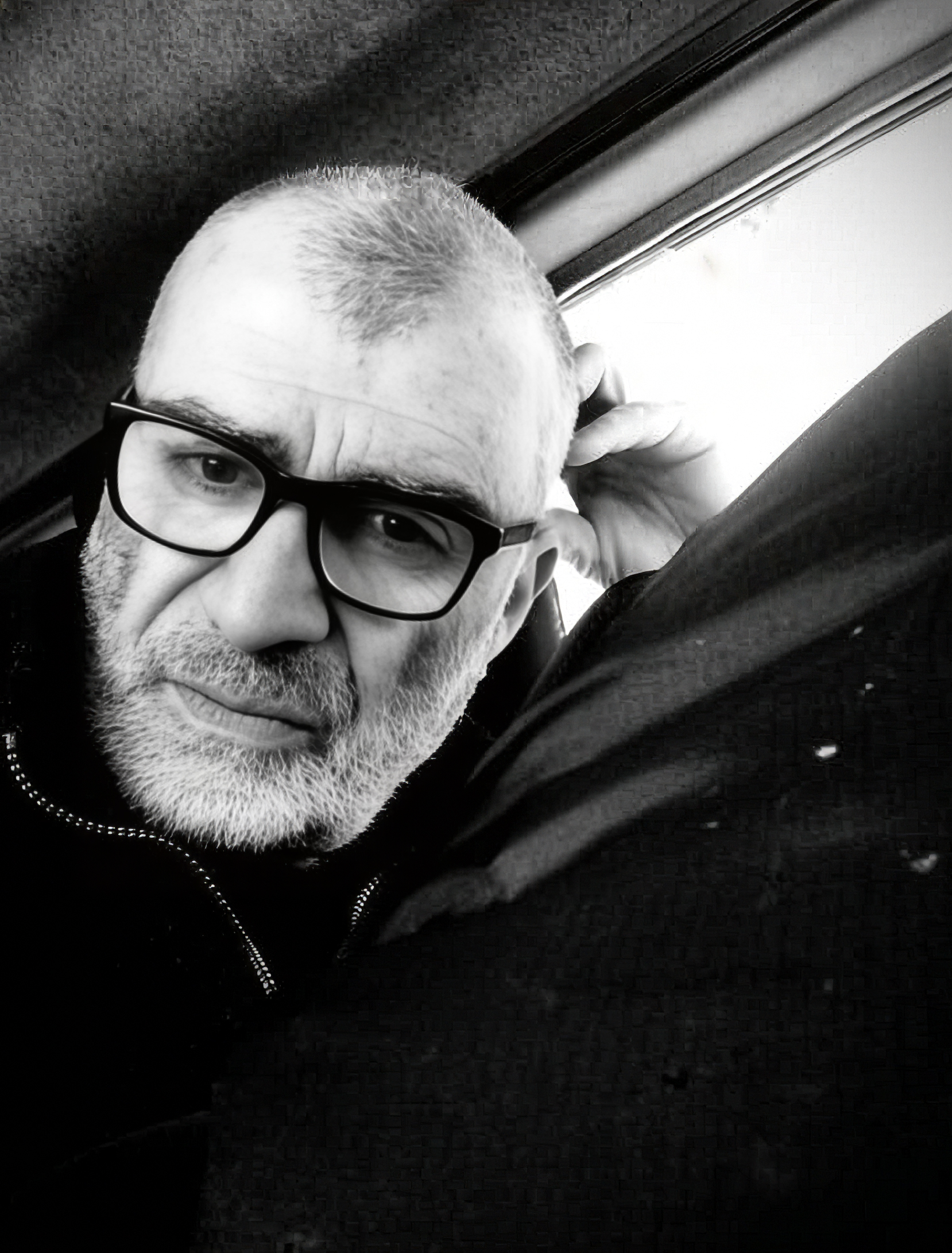
I imagine you were caught by surprise there. We were all caught off guard when this happened. Were you there for some photography project among the many you have done?
Look, first of all, if I knew that I would live through what I lived through for ten days, I don’t think I would have done it. I don’t think any photograph is worth anyone’s life. I am not a war correspondent. Since I was young, I knew that photographs don’t change the world. For the last 30 years, I have been photographing the routes of Alexander the Great. I am trying to follow the line of his journey. That’s how I found myself in Tyre, in the southernmost part of Lebanon.
I wanted to have the element of surprise, not to know what I would face visually. I knew there were ruins by the sea related to Alexander the Great. I wanted to photograph that. I stayed there, and on the first or second night, they started hitting. I believe about 20 kilometers away from us. You could hear this “boom-boom” constantly. At some point, the noise approached 10 kilometers, then five, then a thousand meters.
When you hear it at a thousand meters, you know it’s right next to you. It’s a very bad feeling.
Beyond the noise, did you have any information about what was happening?
I knew that something would happen, that America and Israel would hit Iran. I never believed, however, that from the moment I went to Lebanon, this entire buildup of forces would occur. They knew it would happen, but they were telling people not to panic.
The interrogation by Hezbollah
I won’t hide from you that on the third day I was in the South, they interrogated me. It lasted six to seven hours. It was Hezbollah. They were asking me: “What are you doing here? How did you end up here while everyone is leaving?” They suspected me of being a spy or a “spotter”—you know, those who give coordinates for strikes.
There, I truly felt the danger. If they take you for a spy, they shoot you in the street.
At first, they had put me in the back; the situation was wild. However, because I am Greek, they showed some respect. I firmly believe that if I didn’t have this Greek passport, the interrogation I went through would have been much harsher. They saw my age, they saw that my knee is troubling me, they saw my equipment and understood that I do not possess any advanced technology for espionage. This saved me. The people here appreciate our origin, and that played a major role.
And, because I have read the Quran, have been to Iran many times, and know their culture, a mutual understanding developed. They saw that I had nothing to hide. And they were the ones who finally helped me leave the southernmost point.
In June, I turn 65. I don’t have much room left in life anymore. Also, I take care of my mother who is 99 years old. This gives me a great responsibility. When I return, I just want to be able to hug her. It is very difficult to hear the bombings coming closer and closer. At some point, a man came with a car and took us all away from there.
I realized that I would slowly take the road back. I saw people running with their shoes in their hands to find shelter. To leave, to save themselves. It is a bad thing. You don’t know if they will make it. It is horrible to see such images for days.
I don’t photograph these things. I can’t. For me, it is too ugly. Anyone who knows my work knows that I don’t do such things. I don’t want to find myself again in places where such suffering happens and be used journalistically.
Some hear about Alexander the Great and are impressed, but these days the situation is beyond any description. I have been to dangerous places; eight months ago I was with the Taliban in Afghanistan, but what I experienced here is incomparable.
Here is the translation of the text into English:
The horror of displacement and the threat of drones
Everything happening here is a horror… To be forced to leave everything behind, to take your children and carry your whole life in a bag… Your entire daily life is overturned in a moment. I saw a grandmother carrying her things, and I thought of my own mother. And I thought how many people are in this position.
Now, in these places, you have drones over your head all day long. They are constantly circling. Israeli drones are everywhere and the area is full of exploding rockets. It’s terrible…
I am now staying in a neighborhood where Armenians live. To understand the distances, it’s like a bombardment happening in Neo Irakleio and you are in Thiseio. It’s very, very close…
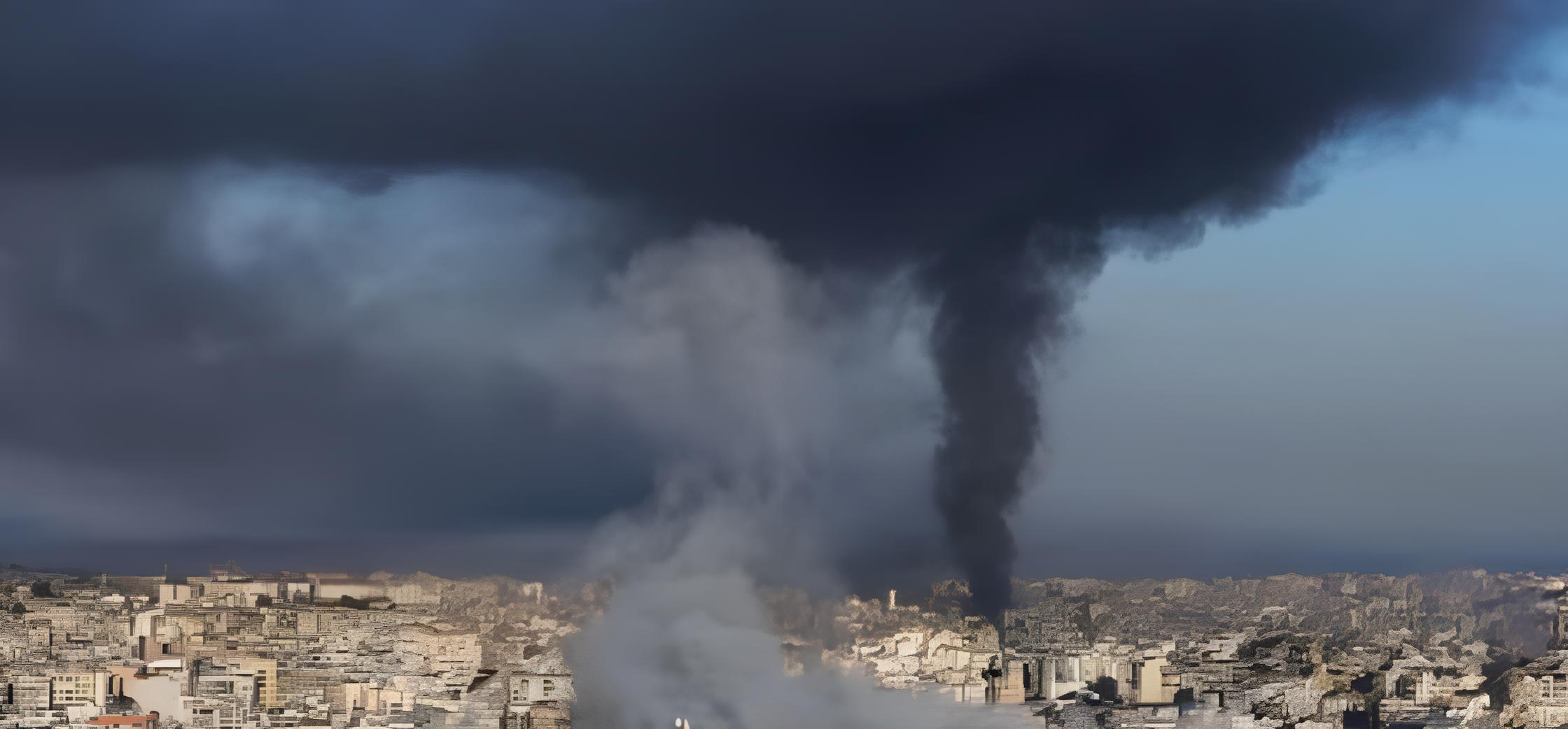
What is the situation in the country? Can a citizen rely on the state?
The problem is that Lebanon is now an endless mess. It’s like a boat taking on water from everywhere. And the worst part is that they want to eliminate Hezbollah. If that happens, as Ali told me too, we will be led to civil war again.
This place is heartbreaking. I have visited 100 states, but what is happening here is indescribable.
The people are exhausted. Lebanon is not a homogeneous country. There are Armenians, Sunnis, Shiites, Maronites… It’s a mosaic that is collapsing. I don’t know how all this will be pulled back together.
It was the first time I went to Lebanon and that’s perhaps why it affected me so much. Usually, when I go to Pakistan or Afghanistan, I return three or four times. Here, before the “bang,” people didn’t know where it would come from. It’s a dismantled state, without direction.
“You cannot understand the reality here if you don’t live it. There is a proverb that says you can hear something a thousand times, but if you don’t feel it, it is not the same.
I think of our ancestors who became refugees. Now these people are experiencing the same thing, and many will try to come to Greece or neighboring countries. Many will come and they will be psychologically traumatized. Here, after just 10 days, I feel a terrible psychological pressure.
So, what will you do now? Will you stay there?
I will stay here; I’m not leaving. I don’t want to experience that [the flight with the refugees], but staying is dangerous.
I’m trying to see what I’ll do. Today a photographer friend is arriving; he knows about drones and will have equipment. I don’t know if I want to go and photograph the ruins. How is Alexander the Great connected to wars? It is a very sensitive issue. You see the world suffering… what am I to go and photograph? The mother running with her children? But what should I photograph, I’m telling you? The pain?
People must be careful. What is happening throughout the Middle East is terrible. I think the big mistake has now been made. You cannot kill Khamenei inside his home, together with his family.
I have lived among 100 different peoples. This thing they call Israel… I don’t know, is God or the devil winking at them? But I know one thing: Whoever lives by the sword, at some point dies by the sword.
Today we are waiting for them to level an entire area above the airport. They have sent leaflets; the IDF (Israeli Army) has issued an announcement that they are coming to strike. They will level it and the people know it; they are waiting.
But I would like people in Greece to know that the Lebanese love us very much. Wherever you go, they open their door to you.
The people are tired and afraid. When someone persecuted comes to Greece or anywhere else, they don’t want to change your home or the colors in your mind. They simply want to be saved. These people leave with a bag in hand and try to save themselves… One must read the Quran to understand their mindset.
What we are living through is unprecedented. Tonight, reports say that there will be a very fierce bombardment. They will level an entire place, an area that, if we matched it to Athens, would be like they were hitting Neo Irakleio and Marousi together. It is terrible; they will level it completely.
The big question is what the people will do. There are no more planes, and many are looking for a way to leave. When that happens, a C-130 military aircraft might need to come to pick up those who can leave. The irony is that, even if a plane comes, we don’t know how we will manage to reach the airport in this chaos. Maybe I will need to wait until I finish my photography project, if I finally manage to.
I found myself in a situation I did not seek, but through this ordeal, I understood something more about life and the world. I don’t know if what I learned is good or bad, but I certainly have a clearer picture now. I understood better how things work in such extreme conditions.
One thing I want to say for the end… say a prayer for Lebanon, because the people here are full of love.”
Note: The photos in the post are those he sent me. Due to the poor internet connection, their quality is very low. He was unable to send others. The video is from his Instagram account: https://www.instagram.com/pavloskozalidis